
The Bombay Andhra Mahasabha and Gymkhana
- Client: -
- Location: Mumbai
- Expertise: -
- Status: -
- Cost: -
- Year of Completion: 2026
The Bombay Andhra Mahasabha & Gymkhana
Established in 1928 in Dadar East, The Bombay Andhra Mahasabha & Gymkhana has stood for nearly a century as a vibrant cultural, social, and recreational hub in Mumbai. Dedicated to celebrating Telugu heritage while serving Mumbai’s diverse multicultural community, the institution brings together performing arts, education, sports, wellness, and social welfare under one roof. Today, through state-of-the-art redevelopment—featuring a multi-tier auditorium, banquet facilities, and guest accommodation—it continues its legacy as a dynamic gathering space bridging tradition, community, and contemporary urban life.
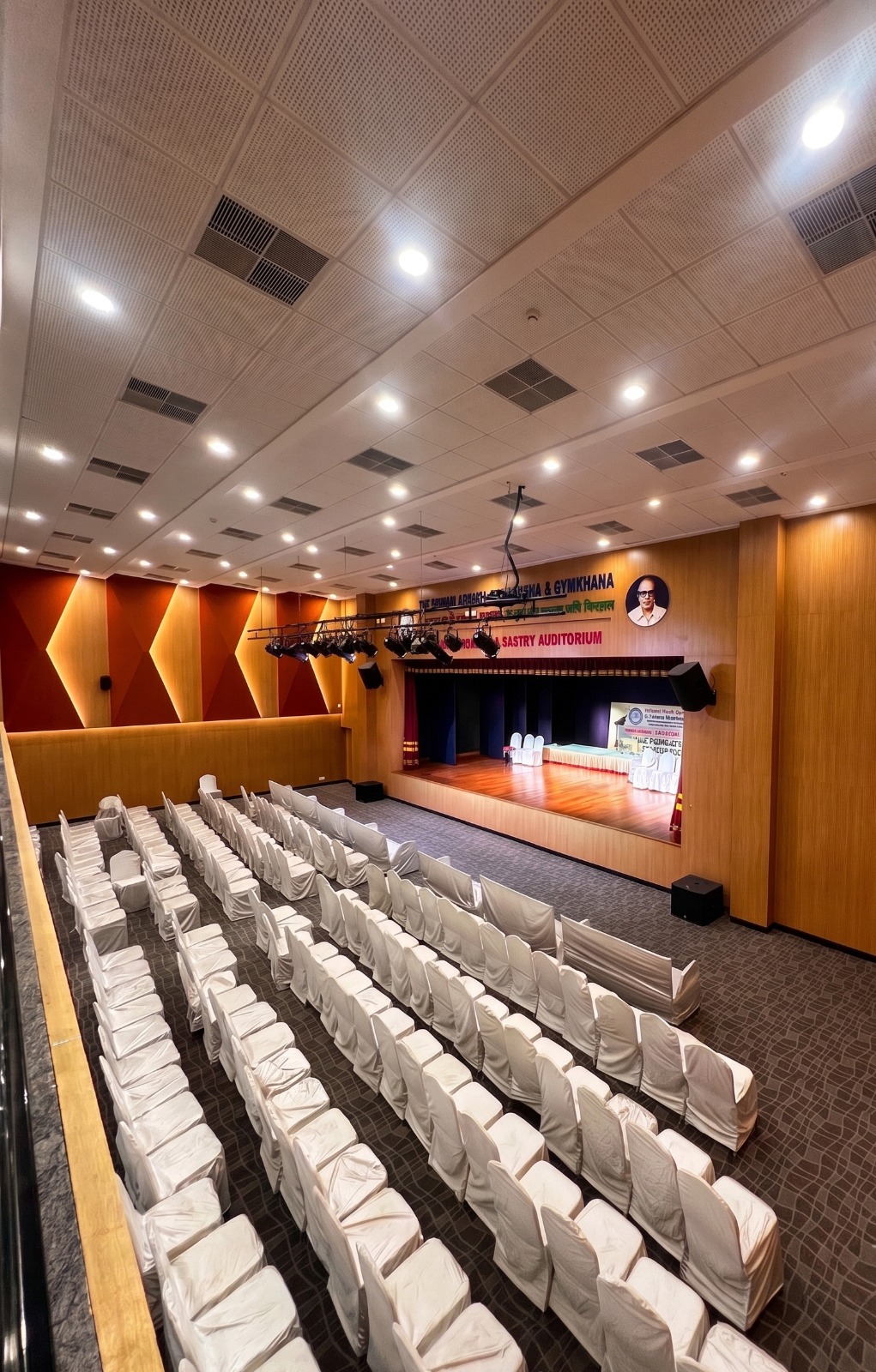
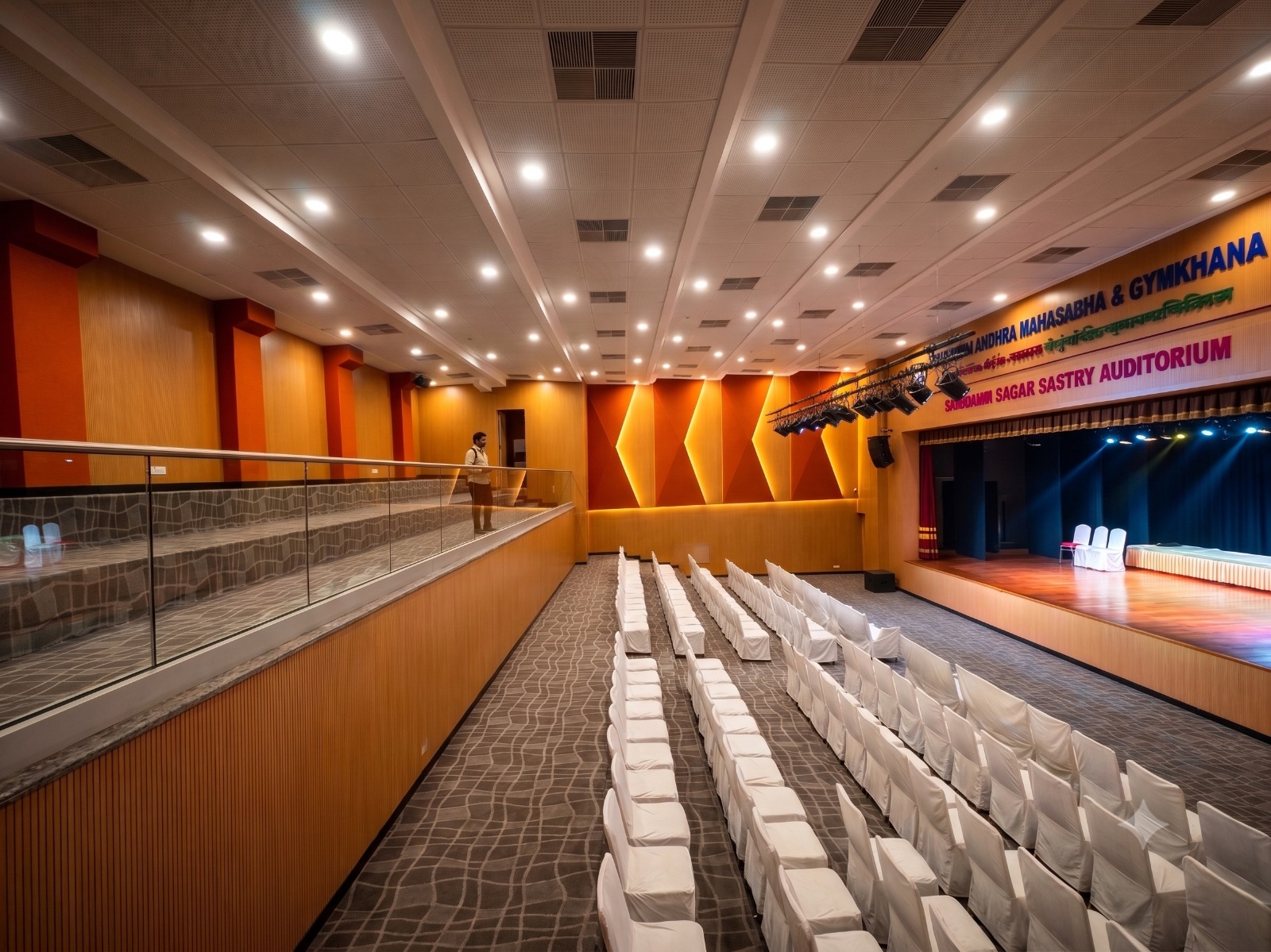
Located in Dadar East, Mumbai, the Bombay Andhra Mahasabha & Gymkhana is a long-standing cultural and community institution with roots dating back to 1928. Situated within the historic Dadar–Matunga urban fabric, the institution has played an important role in supporting the Telugu community in Mumbai while gradually developing into a wider social, cultural, educational, recreational and welfare center. Today, it represents more than a community association; it is a place where cultural identity, social interaction, education, recreation and community service come together.
A Community Institution in the Present
In the present day, The Bombay Andhra Mahasabha & Gymkhana functions as a multipurpose community institution. Its activities extend across cultural, literary, sporting, recreational, educational, health and social fields. The organisation itself describes its work as serving not only Telugu people who migrated to Mumbai but also other sections of society.
Cultural and literary activities form an important part of its identity. The Mahasabha organises musical concerts, classical and folk dance programmes, dramas and Telugu literary activities. It has also supported interactive programs connecting Telugu and Marathi cultures. Such activities make the institution a space where cultural traditions can be practiced and shared rather than simply preserved as historical memories.
Sports and recreation are another major component. The institution encourages children and young people to participate in sports, indoor games and competitions. Its gymnasium provides a more contemporary recreational function, while yoga classes introduce another dimension of physical and mental wellbeing. Together, these activities allow the building to serve users across different age groups and interests.
Health and social welfare are also significant aspects of the Mahasabha's present role. The organisation has conducted free medical camps covering areas such as allopathic, Ayurvedic and homoeopathic medicine, eye care and physiotherapy. It has also provided support during natural calamities and accommodation assistance for cancer patients at concessional rates. These activities demonstrate that the institution functions not only as a cultural venue but also as a community support network.
Communities and Users
The primary community historically associated with the Mahasabha is the Telugu community of Mumbai. However, its role has developed beyond a single linguistic or cultural group. The organization's memorandum states that its objectives include preserving and promoting the language, culture and history of Andhras residing in Greater Bombay while also encouraging literary, scientific, cultural, moral, physical and artistic activities without distinction of language, religion, caste or creed. It also refers to cultural integration within India.
This creates a diverse user profile. Telugu families form an important user group, but the institution can also serve children, young people, women, senior citizens, artists, sports participants, students, families and visitors attending community programmes. Cultural events attract performers and audiences, while sports and fitness facilities generate a different pattern of everyday use.
The Mahila Sakha further broadens the community profile by providing dedicated activities for women and children. Its programmes include cultural celebrations, indoor and outdoor games, drawing and painting competitions, picnics and handicraft exhibitions.
From an architectural perspective, this diversity of users is particularly important. A community building such as the Mahasabha cannot be understood through a single function. It operates as a network of spaces accommodating different generations, activities and levels of public interaction.
Future Vision and Development
The Mahasabha has identified several directions for upgrading its facilities and expanding its community role. One of its stated proposals is the development of a state-of-the-art air-conditioned multipurpose auditorium along with an air-conditioned seminar and conference room. These proposed facilities would strengthen its capacity to host cultural performances, meetings, conferences, educational programs and larger community events.
The organization has also expressed plans to improve its gymnasium facilities and expand its educational and social initiatives. Its proposed activities include supporting needy schools and educational institutions, assisting orphanages and old-age homes, providing ambulances and medical equipment, and collaborating with NGOs and social organizations for community-development projects.
Education and cultural transmission are also part of the future direction. The organization has proposed endowments for meritorious students and teachers, financial assistance for poor and disabled students, and certified courses in traditional dance forms such as Kuchipudi. These initiatives indicate an intention to connect cultural preservation with contemporary education and community development.
The future of the Mahasabha can therefore be understood as an expansion from a traditional community association toward a more comprehensive cultural and social institution.
Architectural Character and Design Theme
A suitable design theme for understanding the Mahasabha is "Cultural Identity and Community Interaction." The institution's architecture can be interpreted through the relationship between cultural identity, social interaction and flexibility.
The first layer is cultural identity. The Mahasabha was established partly to preserve Telugu language, literature, arts and traditions within Mumbai's multicultural environment. Its activities in music, dance, drama, literature and festivals give the institution a strong cultural dimension. Architecture can support this identity through spaces for performance, exhibition, gathering, learning and cultural expression.
The second layer is community interaction. The building brings together people of different generations and backgrounds. Children participate in sports and competitions, young people use recreational facilities, women participate in cultural activities, families attend functions, and senior members participate in community programs. The building therefore becomes a social meeting point rather than simply a destination for a single activity.
The third layer is flexibility. A cultural and community institution must accommodate activities that vary greatly in scale. A space may need to function as a meeting room at one time, a performance or cultural venue at another, and a social gathering space on another occasion. The proposed multipurpose auditorium and conference facilities reinforce this requirement for adaptable spaces.
From this perspective, the architectural identity of the Mahasabha can be described as a transition between heritage and contemporary community life. Its cultural roots provide continuity, while its changing programs allow it to remain relevant to newer generations.
The Mahasabha in the Dadar–Matunga Context
The location of the Mahasabha is significant because Dadar and Matunga form one of Mumbai's established residential and cultural neighbourhoods. The address on Lakhamsi Napoo Road places the institution within an urban environment with a strong history of community organizations, educational institutions and cultural activities.
Its location allows the Mahasabha to function as part of a larger neighbourhood network rather than as an isolated cultural centre. The surrounding urban context contributes to its potential as a community gathering point, while its established identity attracts users from beyond the immediate neighbourhood.
The institution therefore represents an interesting example of how migrant communities have contributed to the cultural landscape of Mumbai. Rather than abandoning cultural identity after migration, communities established institutions that allowed language, traditions, arts, education and social relationships to continue within the new urban environment.
Cultural Significance
The significance of The Bombay Andhra Mahasabha & Gymkhana lies in its continuity. Since 1928, the organization has adapted to changing generations while maintaining its connection with Telugu culture. Its activities have expanded from education and community support to include performing arts, literature, sports, health, women's activities, social welfare and recreational facilities.
This makes the institution an example of living cultural infrastructure. Unlike a museum, whose primary purpose is to preserve objects and memories, a community institution preserves culture by allowing people to actively practice it. Dance is performed, festivals are celebrated, language is used, sports are played, people meet and social networks are maintained. Its importance is therefore not limited to the physical structure.
The real value of the Mahasabha lies in the relationship between people, culture, activities and place.
Proposed Design Intervention
As part of the proposed redevelopment and future vision for the Bombay Andhra Mahasabha & Gymkhana, the design introduces a range of spaces that respond to the institution's cultural, social and community-oriented character. The proposal includes a wedding hall, banquet hall and conference room, along with a multipurpose auditorium distributed across two floors to accommodate cultural performances, community gatherings, conferences and large-scale events. A hostel facility is also incorporated to provide accommodation for visitors, performers, students, guests and participants attending programmes at the Mahasabha. The combination of these functions aims to create a more integrated community facility where cultural activities, celebrations, professional gatherings, accommodation and social interaction can take place within the same institutional setting. The proposed spaces are planned with flexibility in mind, allowing the complex to respond to both everyday community use and larger event-based footfall.
Footfall and Pattern of Use
The footfall can be understood through the different activities taking place on the premises. Regular activities such as gymnasium use, yoga, sports and community meetings are likely to create a more consistent everyday flow of users. Cultural programmes, competitions, festivals, social gatherings and large functions can create substantially higher peak occupancy.
This means that the institution experiences a variable pattern of use rather than a constant level of footfall. On ordinary days, the building functions as a neighbourhood and community facility, while during major events it can transform into a high-occupancy gathering space.
This variation has important architectural implications. Entry and exit points, circulation, waiting areas, toilets, service access and event spaces need to accommodate changing crowd sizes. A successful community centre therefore requires a balance between spaces for everyday use and spaces capable of handling large gatherings.
Andhra Community Spaces in Mumbai
The Andhra and Telugu community in Mumbai has developed and maintained a network of cultural and community spaces that support social interaction, cultural activities, education, sports and celebrations. These spaces provide a physical setting for festivals, performances, meetings, classes and community gatherings, while also helping preserve Telugu cultural identity within Mumbai’s diverse urban context. The Bombay Andhra Mahasabha & Gymkhana, established in 1928, is one such long-standing institution, with activities extending across culture, literature, sports, health, yoga and social welfare. The following photographs document different community spaces, buildings and activities associated with the Andhra/Telugu community, helping to understand their architectural character, scale, spatial organisation and relationship with community life.